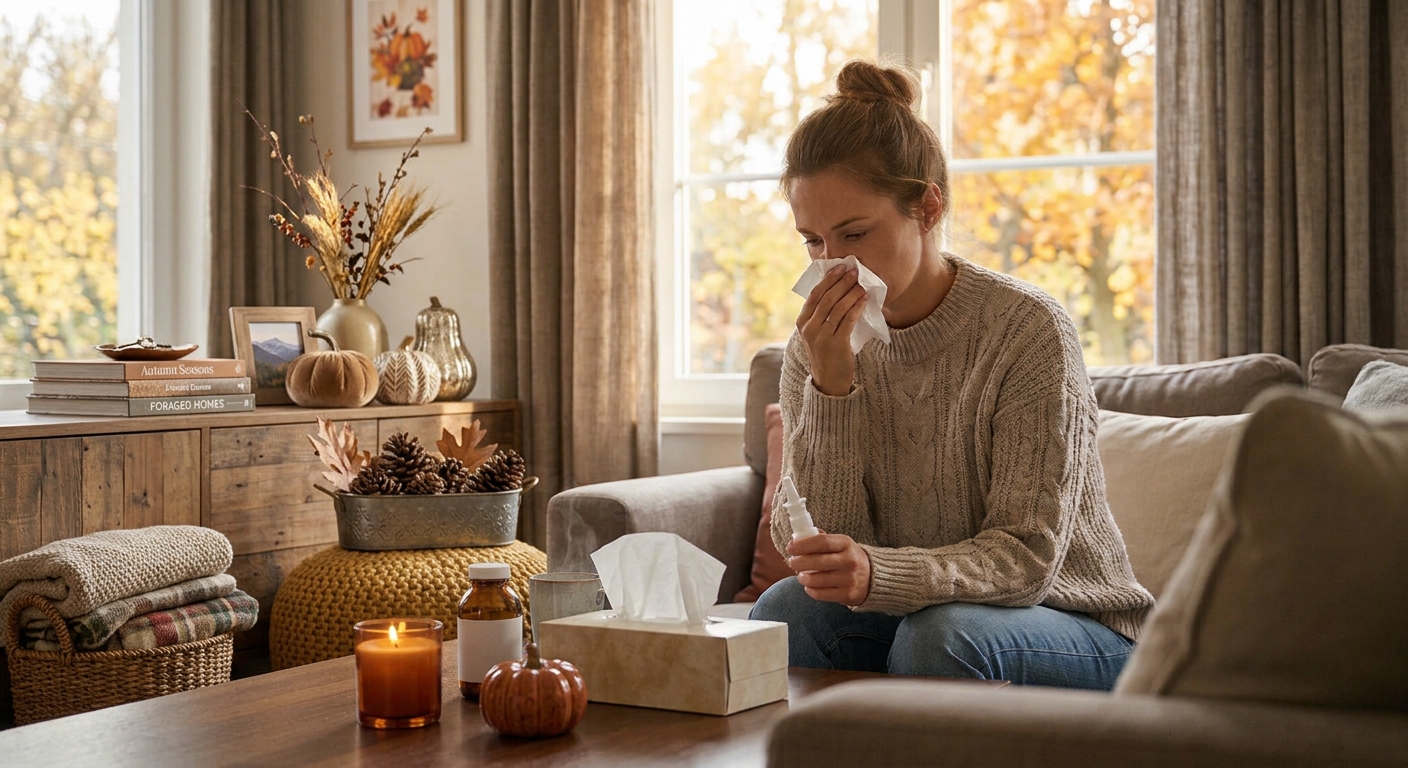
How to Manage Fall and Holiday Allergies
Fall brings cozy sweaters, pumpkin pie and big family get-togethers. It also brings a whole new set of allergy triggers.
Many people expect allergies in spring, but fall allergies and holiday allergies can be just as hard on your nose, eyes and lungs. Between lingering pollen, damp leaves, indoor heating and holiday decorations, there are more triggers around than most people realize. The good news is that a little planning can help you enjoy the season with fewer sneezes.
Ragweed: The Biggest Cause of Fall Allergies
Ragweed is one of the most common causes of fall allergies. It usually starts releasing pollen in late summer and keeps going until the first hard frost. One plant can release huge amounts of pollen, and the wind can carry it for miles, so you don't have to live near a field to feel it.
If you have hay fever symptoms like sneezing, a runny or stuffy nose, and itchy, watery eyes in September and October, ragweed may be to blame. People who are allergic to ragweed sometimes also notice an itchy mouth or throat after eating certain fruits and vegetables, such as melons, bananas or zucchini.
Mold Allergies and Falling Leaves
Piles of wet leaves are a perfect home for mold. When you rake, jump in leaf piles or even walk through the yard, you can stir up mold spores and breathe them in. Mold can trigger the same symptoms as pollen, and for people with asthma it can make breathing harder.
If you're sensitive to mold, try wearing a mask while doing yard work, or ask someone else to handle the raking. Keep gutters clear and move leaf piles away from your home.
Indoor Allergies When the Heat Turns On
The first time you turn on the furnace each fall, it can blow dust, mold spores and other particles that have built up over the summer into the air. Dust mites also do well in warm indoor spaces, especially in bedding, carpet and upholstered furniture.
Before cold weather sets in, change your HVAC filter and consider a high-efficiency filter. Wash bedding weekly in hot water, and vacuum often with a vacuum that has a HEPA filter.
Christmas Tree Allergies and Holiday Decorations
Holiday decorations come out of attics, basements and garages, and they often bring dust and mold with them. Before you decorate, wipe items down outdoors or in a well-ventilated area.
Live Christmas trees and wreaths can also carry mold spores and pollen into your home. Some people notice their symptoms get worse in the days after the tree comes inside. If that sounds familiar, try these tips:
- Shake the tree well or use a leaf blower on it outside before bringing it in.
- Rinse the tree with a hose and let it dry fully in a garage or covered area.
- Keep the tree up for a shorter time.
- Consider an artificial tree, and store it in a sealed container between seasons.
Scented Candles, Fireplace Smoke and Allergy Symptoms
Scented candles, potpourri, air fresheners and crackling fireplaces help set the holiday mood, but strong scents and smoke can irritate the nose and lungs. They can be especially hard on people with asthma or sensitive airways. Choose unscented candles or flameless LED candles, and make sure fireplaces and wood stoves are well vented.
Managing Pet Allergies When Visiting Family
Holiday travel often means spending time in someone else's home, which can bring new triggers like pets, dust or mold. If you're allergic to cats or dogs, a few days in a home with pets can lead to stronger symptoms than usual.
Plan ahead by packing your usual allergy medicines, and if you have asthma, bring your inhaler. If you're staying overnight, consider bringing your own pillow or a dust-mite-proof pillow cover. It's also okay to ask your host if a pet can stay out of the room where you'll be sleeping.
Food Allergies at Holiday Meals
Holiday meals are full of shared dishes, and it's not always clear what's in them. Nuts, eggs, milk, wheat and shellfish often show up in stuffing, casseroles, desserts and sauces. If you or a family member has a food allergy:
- Let the host know ahead of time.
- Offer to bring a dish you know is safe.
- Ask about ingredients before eating.
- Always carry prescribed emergency medicine, such as an epinephrine auto-injector.
Tips for Fall Allergy Relief
- Check pollen counts. Weather apps and websites often list daily pollen levels. On high-count days, limit time outdoors.
- Keep windows closed. Use air conditioning or heat instead of letting outdoor air in.
- Change clothes and shower after being outside. This keeps pollen off your furniture and pillow.
- Start allergy medicines early. Some allergy medicines work best when started before symptoms are at their worst.
- Try a saline rinse. Rinsing the nose can help wash out pollen and other irritants.
When to See a Doctor About Seasonal Allergies
If over-the-counter medicines aren't helping, your symptoms last for weeks, or you're having trouble breathing, wheezing or frequent sinus infections, it's time to talk with a healthcare provider. An allergist can help find out exactly what you're allergic to and build a treatment plan that may include prescription medicines or allergy shots.
The holidays should be about time with the people you love, not reaching for tissues. With a little preparation, you can breathe easier and enjoy everything the season has to offer.
This article is for general information only and is not a substitute for medical advice. Talk with your healthcare provider about your symptoms and treatment options.