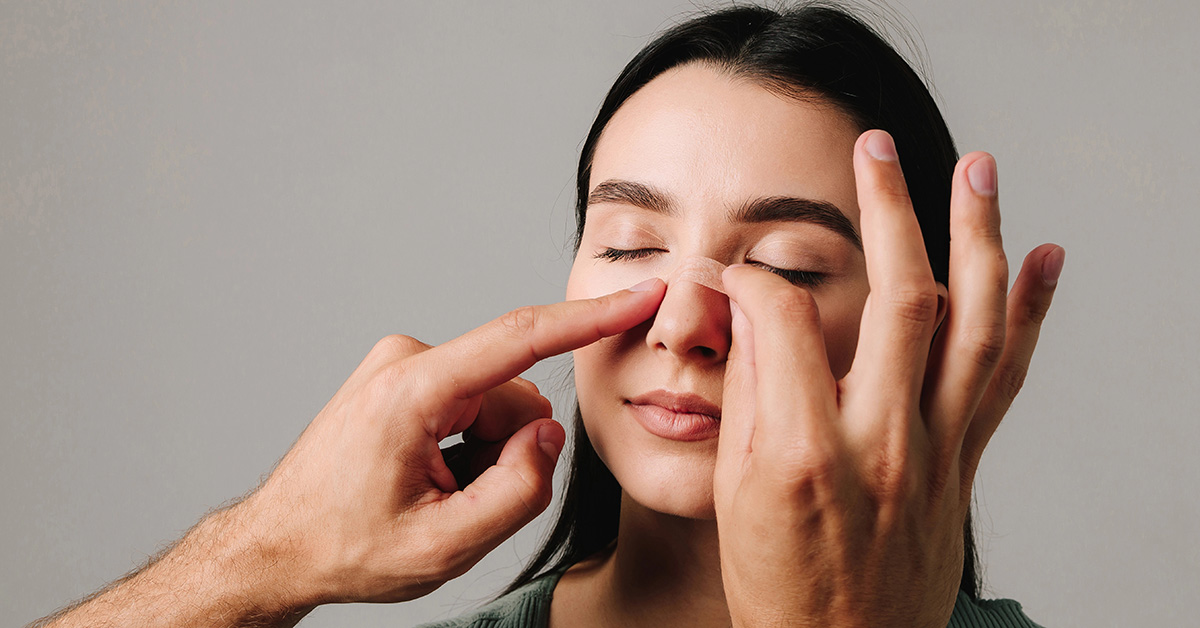
How Nasal Strips Can Help You Breathe Easier
Nasal strips are small adhesive bands placed across the bridge of the nose to gently lift the sides of the nostrils. For many people, that simple change can make breathing feel easier during sleep, exercise, or times of congestion.
They do not treat the underlying cause of sinus disease, but they can offer noticeable short-term relief when the nasal passages feel tight or blocked.
How Nasal Strips Work
The lower part of the nose can collapse slightly inward during breathing, especially when lying down or during physical activity. Nasal strips work by pulling the nasal walls outward. This widens the airway at the front of the nose and can reduce resistance to airflow.
The result is often:
- Less stuffiness
- Quieter breathing
- Reduced mouth breathing
- A feeling of more open nasal passages
Because they act mechanically rather than medicinally, they can be used by people who prefer a drug-free option.
Who May Benefit
Nasal strips are most helpful for people whose symptoms are related to nasal valve collapse or mild congestion. They may be useful if you experience:
- Snoring related to nasal blockage
- Difficulty breathing through the nose at night
- Congestion from allergies or a cold
- Mouth breathing during sleep
- Reduced nasal airflow during exercise
They can also be a useful tool for people who struggle with CPAP comfort, since better nasal airflow may make nighttime breathing devices easier to tolerate.
What Nasal Strips Cannot Do
Nasal strips are not a cure for chronic sinusitis, a severely deviated septum, nasal polyps, or sleep apnea. They do not reduce inflammation inside the sinuses and they do not replace medical treatment when a structural or inflammatory problem is present.
If congestion is caused by swollen tissue deeper in the nose or blocked sinus openings, a strip on the outside of the nose may offer only limited benefit.
Tips for Better Results
For the best experience:
- Place the strip on clean, dry skin
- Position it across the widest part of the nostrils
- Avoid stretching the skin too tightly
- Use as directed and discontinue if skin irritation occurs
Some people notice an immediate difference. Others find the benefit is modest but still worthwhile during allergy season or a cold.
When to See a Specialist
If you rely on nasal strips every night, or if congestion, snoring, or poor sleep continues, it may be time for a more complete evaluation. An ENT specialist can determine whether allergies, sinus inflammation, or an anatomical issue is limiting airflow.
Nasal strips can be a helpful first step. Lasting improvement often comes from identifying why the nose is blocked in the first place.
Taking the Next Step
If nasal strips help but do not fully resolve your symptoms, a consultation can help uncover the cause. Better breathing during the day and at night is possible with the right combination of conservative care and, when needed, targeted treatment.
This information is for educational purposes only and is not a substitute for professional medical advice. Always consult a qualified healthcare provider for diagnosis and personalized recommendations.